

The Florida Department of Transportation and Florida’s Turnpike Enterprise welcomes you to the Design Public Hearing for the Florida’s Turnpike (SR 91) widening project from north of Glades Road (SR 808) to north of the L-38 Canal in Palm Beach County.

This project is being developed in accordance with the Civil Rights Act of 1964. Under Title Six of the Civil Rights Act, public participation is solicited without regard to race, color, national origin, age, sex, religion, disability or family status. If you have any questions or concerns, please contact Desarae Stills at 407-264-3111 or Lisa Bethancourt at 850-414-4742.
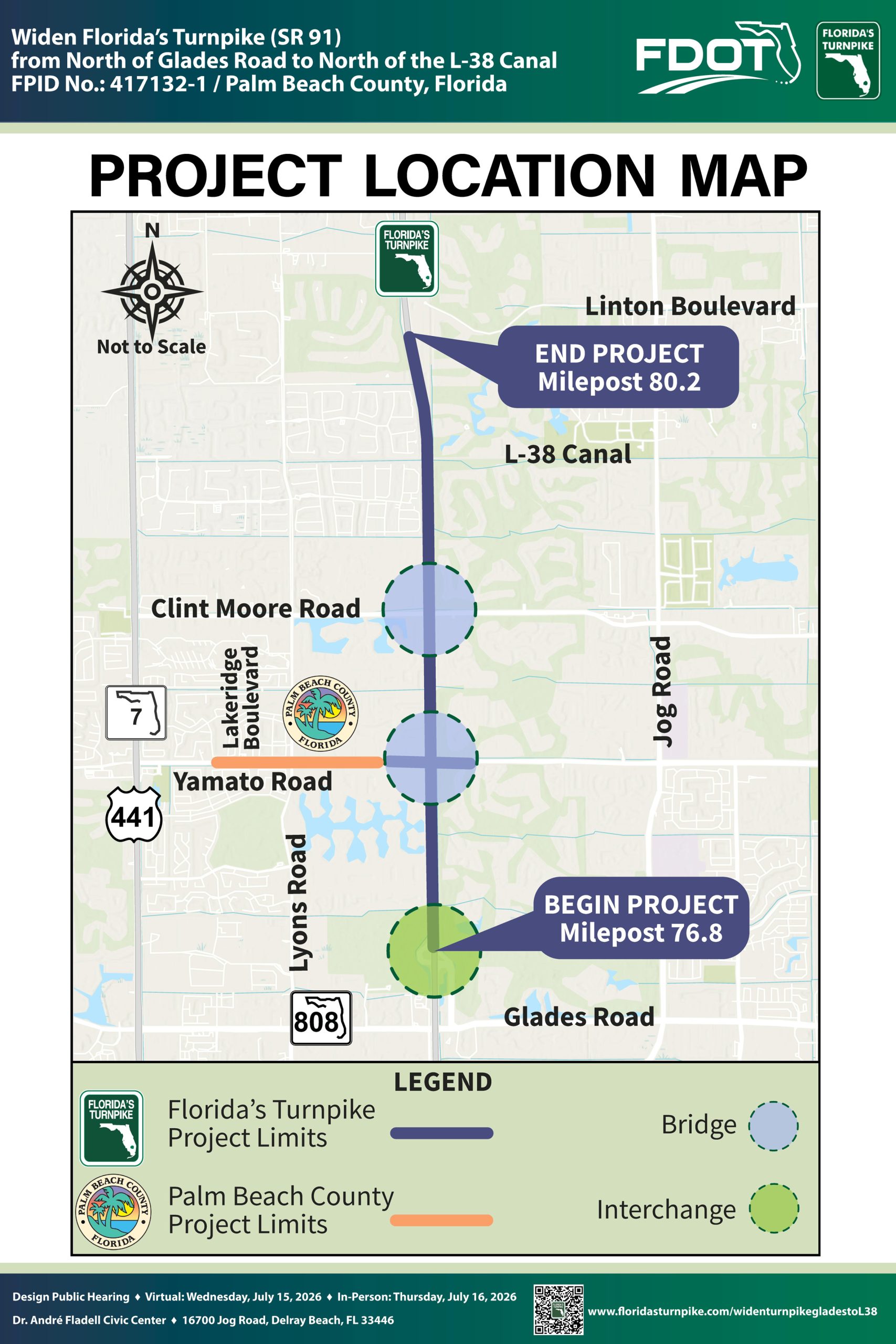
The Florida’s Turnpike proposed improvements include:
- Widening Florida’s Turnpike from six to eight lanes from north of Glades Road to north of the L-38 Canal
- Adding one auxiliary lane in each direction of Florida’s Turnpike. Auxiliary lanes will connect Glades Road to Atlantic Avenue as a merge lane.
- Realigning the southbound off-ramp to the existing Glades Road interchange
- Replacing the bridges at Yamato Road, Clint Moore Road and the L-38 Canal
In addition, Florida’s Turnpike Enterprise has partnered with Palm Beach County Engineering and Public Works to widen Yamato Road from west of Lakeridge Boulevard to west of Florida’s Turnpike from four to six lanes as shown in orange.
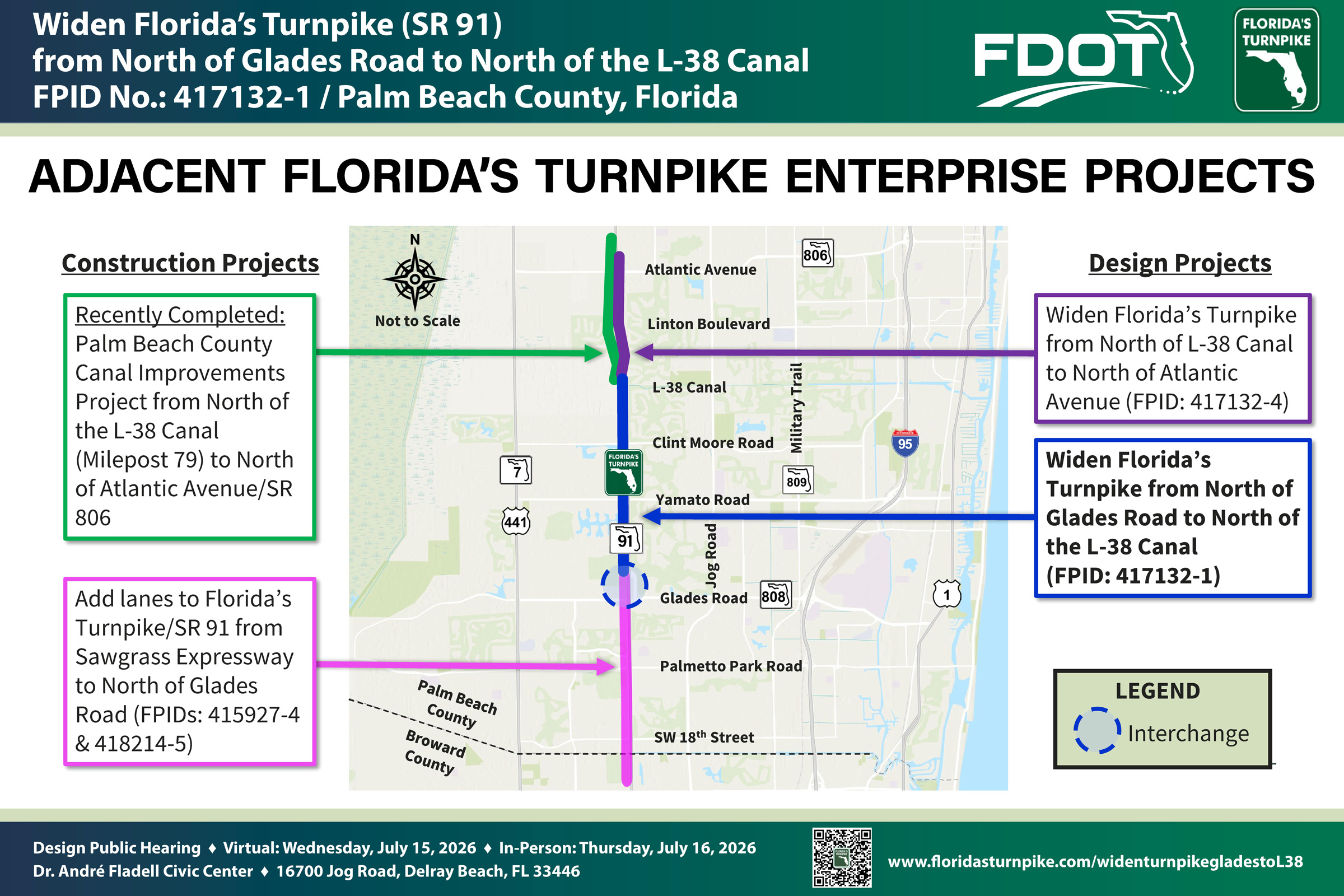
This map shows projects on Florida’s Turnpike that are adjacent to or overlap this project. This project is shown in blue. The future project to the north, shown in purple, is the Florida’s Turnpike widening project from north of the L-38 Canal to north of Atlantic Avenue. The Palm Beach County Canal Improvements project was recently completed as shown in green.
To the south in construction, is the Florida’s Turnpike widening project from the Sawgrass Expressway to north of Glades Road, shown in pink.
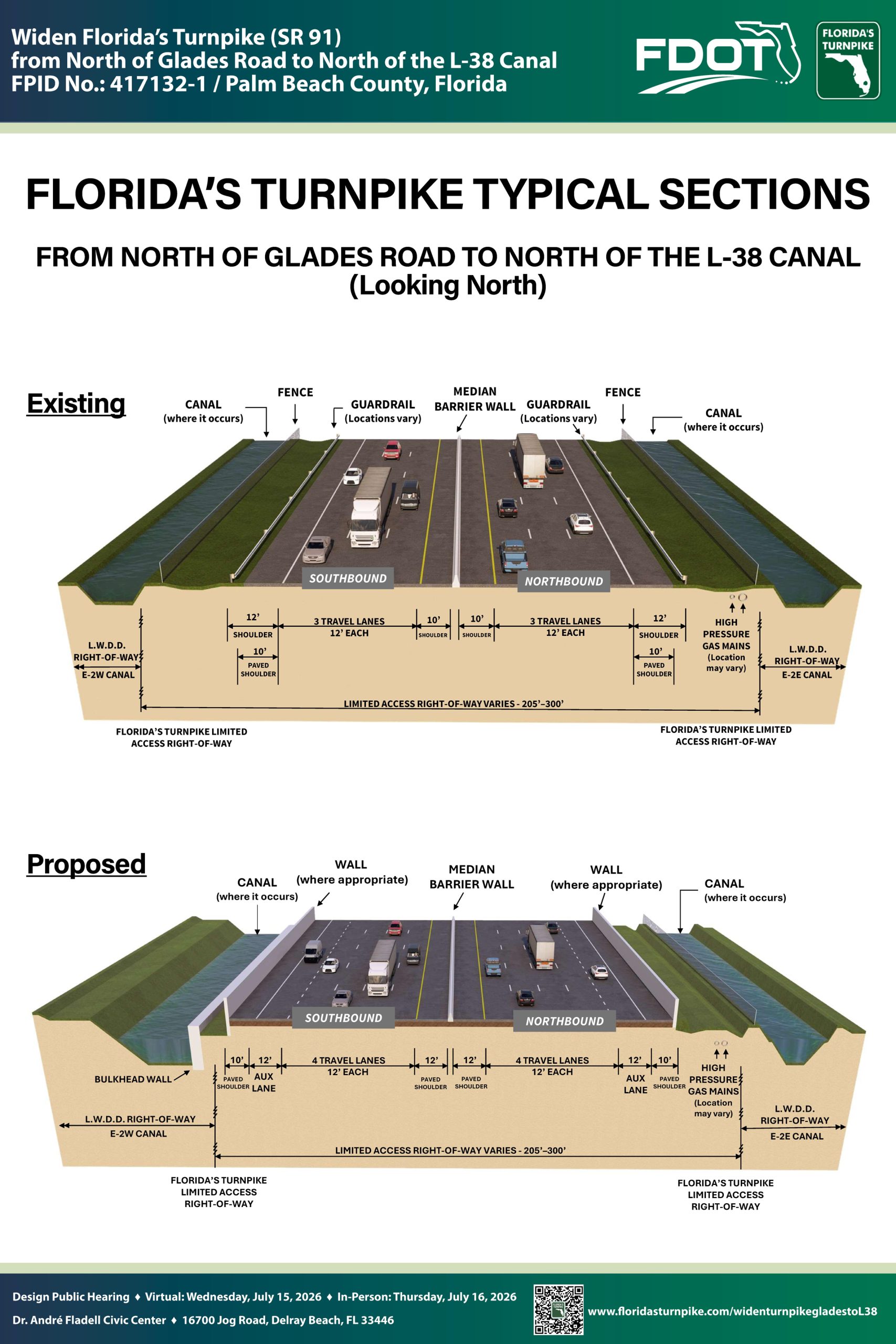
On the top is the existing typical section for Florida’s Turnpike. The limited access right-of-way, varies from 205 feet to 300 feet. In the southbound direction, the roadway currently consists of a 12-foot outside shoulder, three 12-foot travel lanes, and a 10-foot inside shoulder. In the northbound direction, the roadway includes a 10-foot inside shoulder, three 12-foot travel lanes, and a 12-foot outside shoulder. A median barrier wall separates northbound and southbound travel directions. Along the outside of both roadways, guardrails are present adjacent to the grass area beyond the pavement. Along the northbound side of the corridor, there are also high-pressure gas mains located within the grassed area. Additionally, a canal runs adjacent to the roadway in both directions.
The proposed typical section for Florida’s Turnpike is shown on the bottom. Starting from left to right, with southbound travel on the left side, a new bulkhead wall is proposed immediately adjacent to the canal. This wall is intended to provide structural support along the edge of the canal.
The southbound roadway includes a 10-foot outside paved shoulder, a 12-foot auxiliary lane, four 12-foot travel lanes, and a 12-foot inside paved shoulder. The auxiliary lane is carrying the weaving from Glades Road to Atlantic Avenue and will not open until the project to the north of this one is completed. The southbound and northbound roadways would be separated by a median barrier wall. On the northbound side, the proposed typical section includes a 12-foot inside paved shoulder, four 12-foot travel lanes, a 12-foot auxiliary lane, and a 10-foot outside paved shoulder. A wall will be installed where appropriate along the outside shoulder of the northbound and southbound roadways.
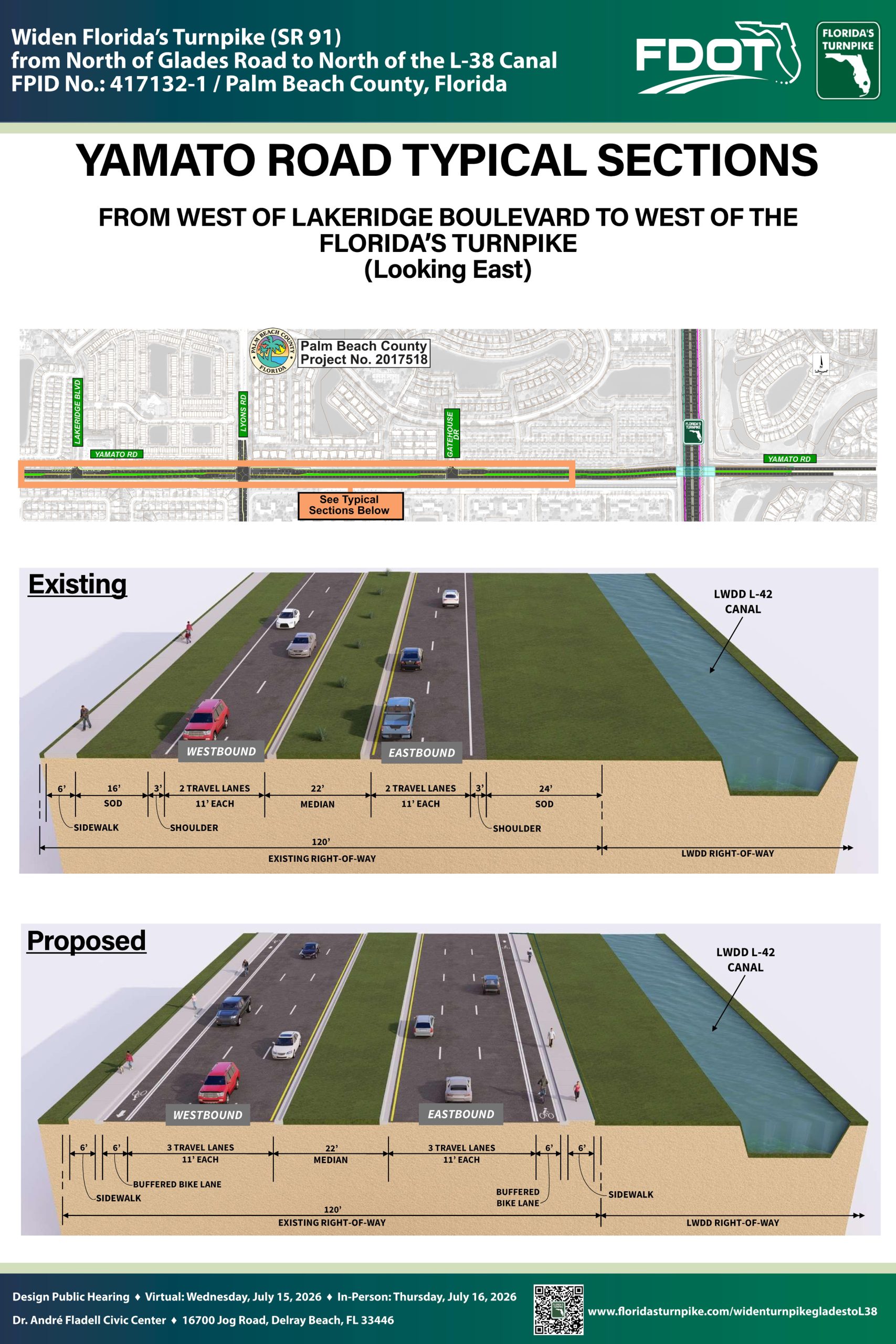
This exhibit shows the existing and proposed typical sections of Yamato Road from west of Lakeridge Boulevard to west of the Florida’s Turnpike looking east. The existing Yamato Road right-of-way is 120 feet. Currently there are two eleven-foot travel lanes in each direction which are separated by a twenty-two-foot median.
On the westbound side, the proposed section includes three 11-foot travel lanes, a 6-foot buffered bike lane, and a 6-foot sidewalk. In the eastbound direction, there are also three 11-foot travel lanes, along with a 6-foot buffered bike lane, and a 6-foot sidewalk. The travel lanes in each direction are separated by a 22-foot median.
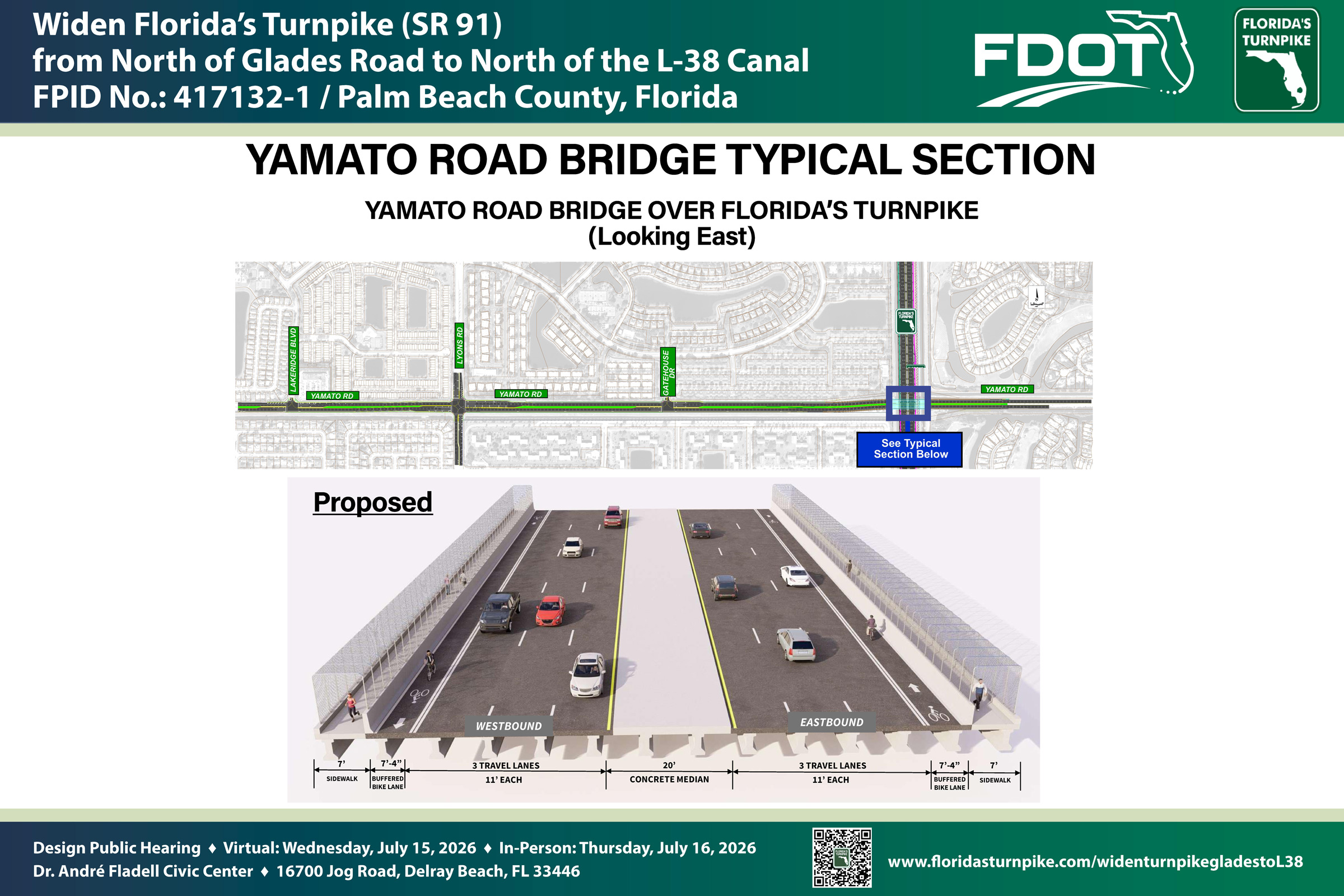
This exhibit shows the proposed typical section for the Yamato Road bridge over Florida’s Turnpike looking east. In each direction, there are three 11-foot travel lanes and 7-foot 4-inch-wide buffered bike lanes, along with 7-foot-wide fenced-in sidewalks.
The westbound and eastbound travel lanes are separated by a concrete median.
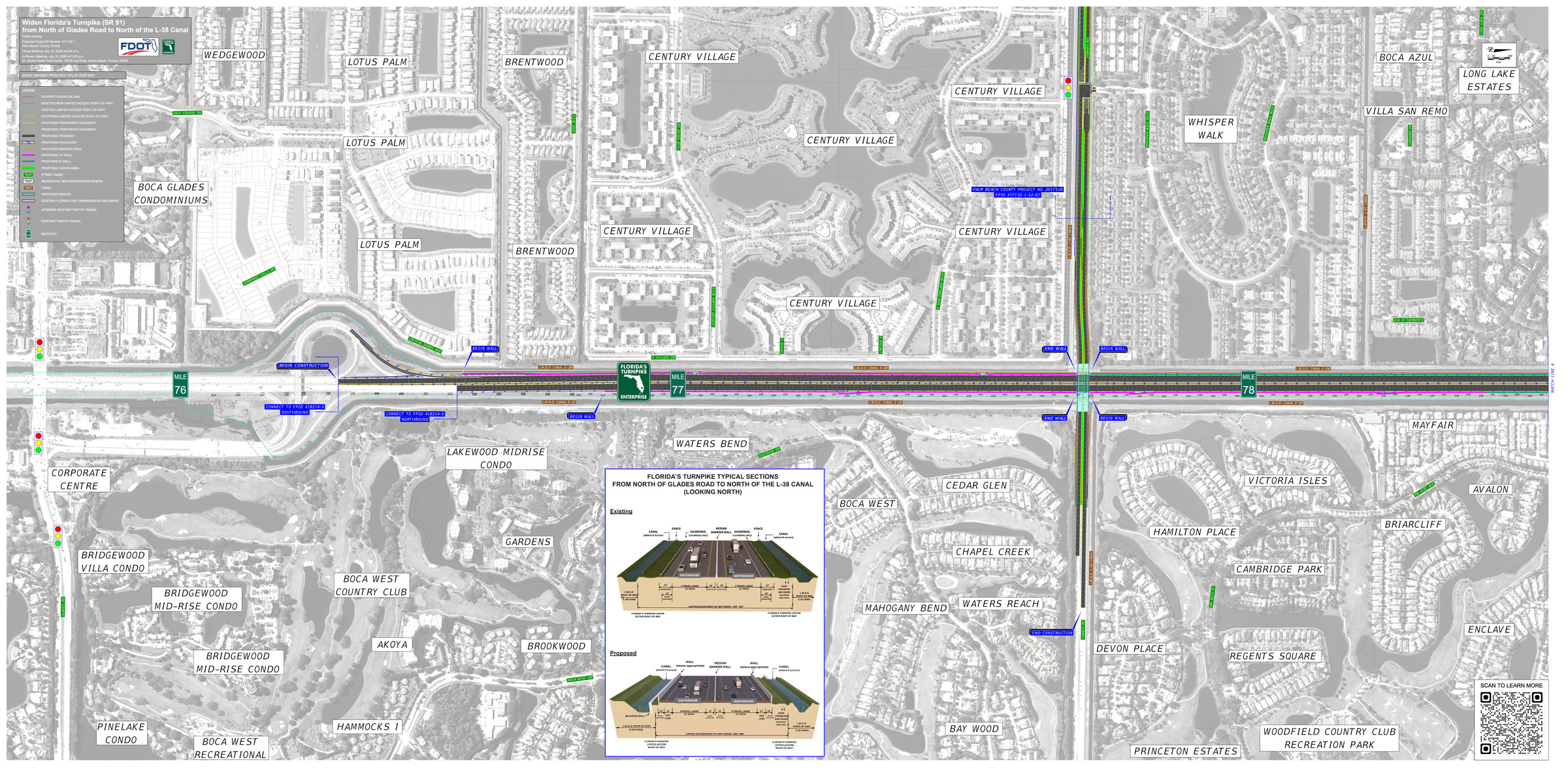
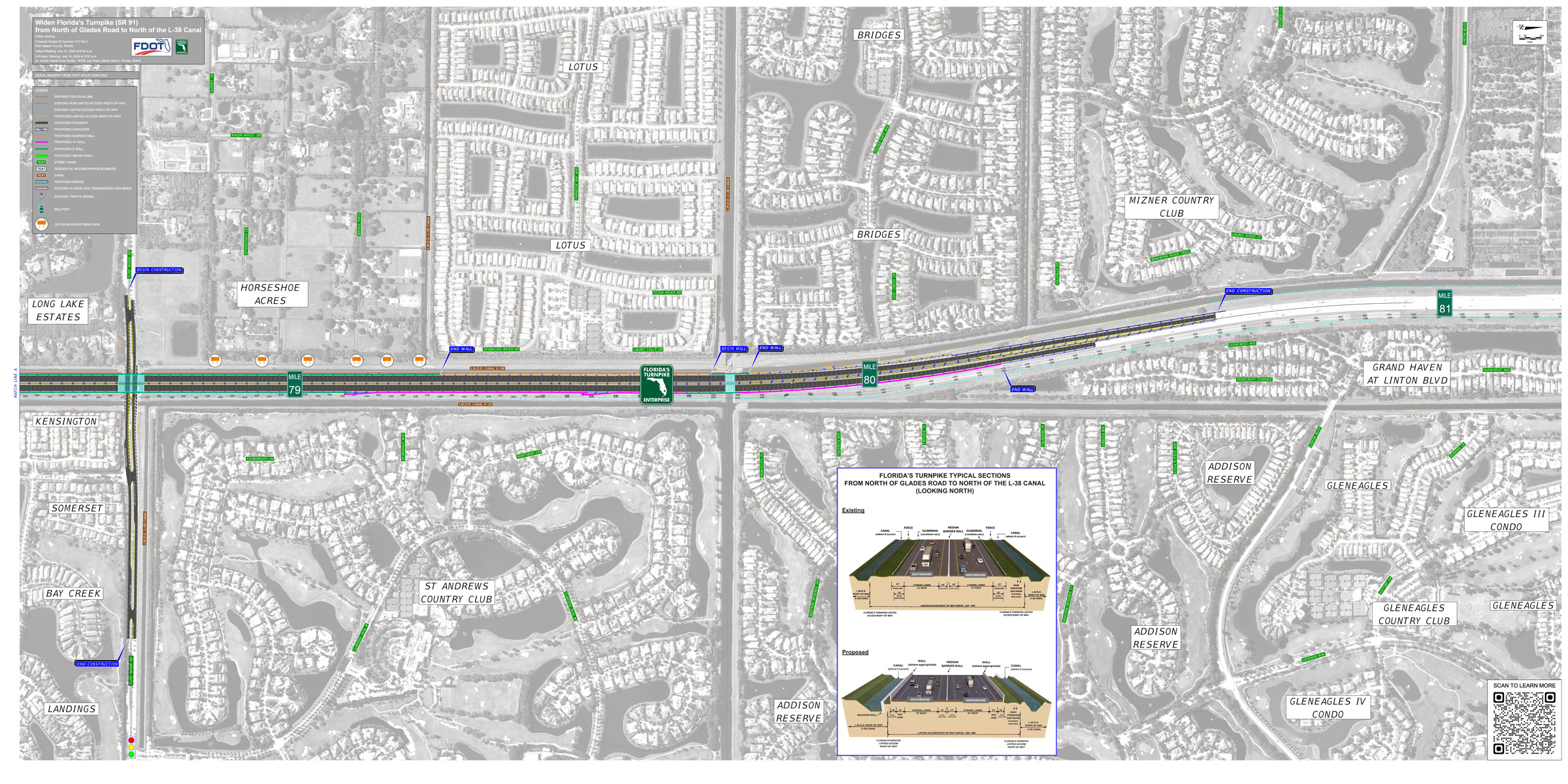
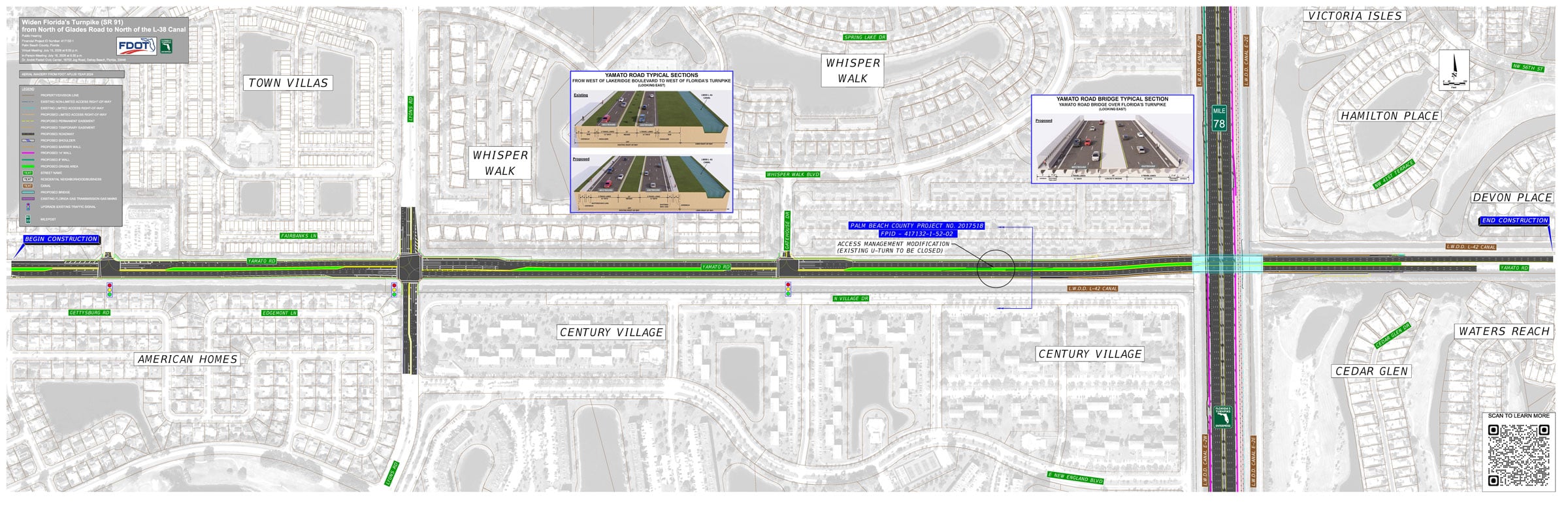
Overall Florida’s Turnpike Improvements Map 1 of 2
Overall Florida’s Turnpike Improvements Map 2 of 2
Overall Yamato Road Improvements Map 1 of 1

Outdoor advertising signs are located within the project corridor. In compliance with Florida Statute 479.25, this Public Hearing is also being held to receive input on the proposed walls and potential conflicts with local ordinance or land development regulations.

This exhibit highlights key milestones for the project. Design is scheduled to be completed in the fourth quarter of 2026. Construction is planned to begin during the third quarter of 2027.

If you would like to speak with someone regarding this project, please contact one of the Turnpike representatives listed here.
Your comments are essential to this process and will help Florida’s Turnpike Enterprise understand your concerns and suggestions for improvement. We encourage the public to submit any questions or comments by July 29, 2026. Questions can be directed to Paul Naranjo, the project manager. His mailing address, phone number, and email are provided in this exhibit.
Alternatively, you may contact Fiorella Teodista, the community outreach coordinator for Florida’s Turnpike Enterprise. Her contact information is also provided.
You may also provide comments in person at the in-person Public Hearing or by filling out a comment form on the project website.
Thank you for participating in tonight’s Public Hearing.